The Comparison between Screw Clamp Terminal Blocks and Spring Clamp Terminal Blocks!


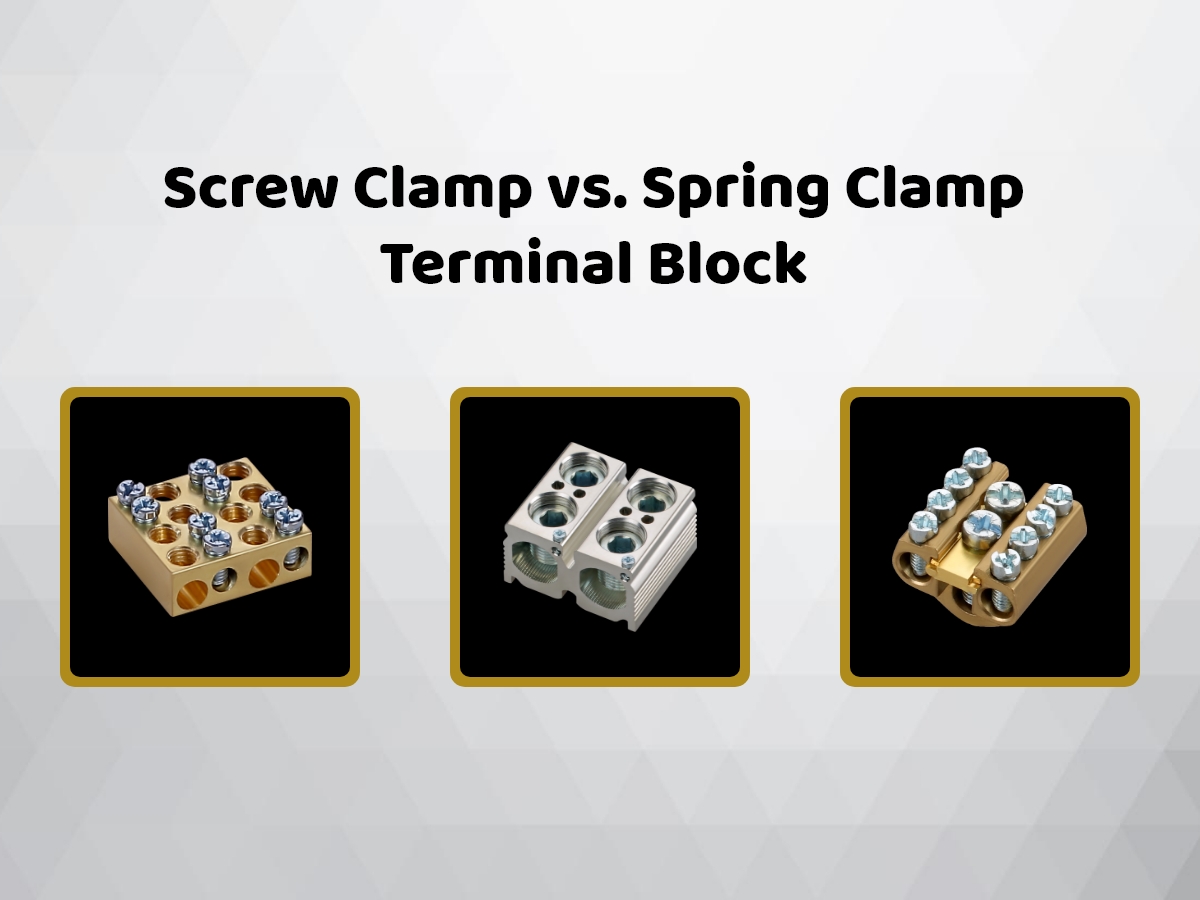
When it comes to reliable electrical connections, choosing the right terminal block is crucial for both safety and performance. Teron Metal Components, a trusted name in precision-engineered electrical hardware, offers a range of high-quality terminal blocks designed to meet diverse industrial and commercial needs. Among the most common types are screw clamp and spring clamp terminal blocks, each with distinct advantages and applications. Understanding the differences between these two can help engineers, electricians, and other tenthusiasts make informed decisions for secure, efficient, and durable wiring solutions.
Screws at Work: Meet the Screw Clamp Terminal Block?
Screw clamp terminal blocks secure wires using a screw-tightened mechanism. The wire is inserted into a metal clamp or yoke, and tightening the screw presses the wire firmly against the conductive current bar. They work with both solid and stranded wires and provide a clear visual indication when the connection is properly tightened.
Advantages of Screw Clamp Terminal Blocks
- High clamping force ensures a strong and dependable mechanical connection.
- Works effectively with both solid and stranded wires.
- Easy to visually confirm proper tightening.
- Performs reliably in environments with moderate vibration.
- Cost-effective and widely used in many industries.
- Long-established and proven connection technology.
Disadvantages of Screw Clamp Terminal Blocks
- Screws may loosen over time due to vibration or thermal changes
- Installation takes longer as each screw needs manual tightening
- Risk of overtightening, which may damage wires or terminals
- May require periodic inspection and maintenance
Spring Into Action: Discover Spring Clamp Terminal Blocks?
Spring clamp terminal blocks use a spring-loaded mechanism to hold the wire in place. The wire is inserted into the terminal opening, and the spring applies constant pressure to maintain secure contact. Some versions allow simple push-in insertion, while others require a small tool to open the spring.
Advantages of Spring Clamp Terminal Blocks
- Fast wiring with reduced installation time.
- Excellent resistance to vibration due to constant spring pressure.
- Maintenance-free.
- Gas-tight connection that helps prevent corrosion at the contact point.
- Ideal for compact, high-density wiring layouts.
- Reduces human tightening errors.
Disadvantages of Spring Clamp Terminal Blocks
- May not support very large wire sizes.
- Some technicians may be more familiar with screw tightening.
- Some versions require a tool to release the wire.
Screw Clamp Terminal Blocks vs. Spring Clamp Terminal Blocks: The Ultimate Showdown
| Screw Clamp Terminal Blocks | Spring Clamp Terminal Blocks |
|---|---|
| Wires are secured by tightening a screw to hold the conductor in place. | Wires are secured by a spring mechanism that maintains constant clamping pressure. |
| Installation takes more time because each screw must be tightened individually. | Installation is faster, often requiring only a push-in action or a simple release tool. |
| Connections may loosen over time in environments with vibration or temperature changes. | The spring maintains a stable and vibration-resistant connection without adjustment. |
| Suitable for heavy-duty applications and larger wire sizes. | Suitable for high-density panels and applications where quick wiring is important. |
| Allows clear visual confirmation that the wire is properly tightened. | Reduces risk of incorrect tightening since the clamping force is automatically controlled. |
| May require periodic maintenance or re-tightening. | Generally, maintenance-free after installation. |
Application Considerations
Choosing between screw clamp and spring clamp terminal blocks depends on installation time, wiring density, maintenance expectations, vibration levels, and the type of system in which they are used.
1. When to choose Screw Clamp Terminal Blocks?
- Heavy machinery: Suitable where strong mechanical grip and firm wire retention are necessary.
- Static environments: with minimal vibration: Works well where connections will not be frequently disturbed.
- High-current circuits: Well, suited for applications involving larger wire sizes and higher load demands.
- Situations where a strong mechanical connection is needed: The screw-tightened design provides a solid and reliable hold on the conductor.
2. When to choose Spring Clamp Terminal Blocks?
- Control panels where space is limited: The compact design supports dense wiring arrangements effectively.
- Applications requiring fast wiring: The quick spring or push-in action helps reduce installation time.
- High-vibration environments: The constant spring pressure keeps the connection secure and stable.
- Installations where connections are frequently changed: Easy insertion and release simplify rewiring or updates.
Wrapping it up: Your Terminal Block Takeaway
In conclusion, both screw clamp and spring clamp terminal blocks provide reliable and efficient solutions for a wide range of electrical applications. Screw clamp types offer strong, durable connections ideal for heavy-duty or high-current setups, while spring clamp types allow for fast installation and stable performance in vibration-prone or high-density wiring environments.
Choosing the right terminal block depends on the specific needs of your project. For expert advice, high-quality products, or to request a quote, reach out to Teron Metal Components at sales@teronmetalcomponents.com or call +91 98252 13149. Our team is ready to help you find the perfect solution for your application.